Newsroom
What Is a Cross Cylindrical Roller Bearing and When Should You Use It?
In many high-precision applications, standard ball bearings are simply not enough.
This is where cross cylindrical roller bearings come into play.
🔹 What Is a Cross Cylindrical Roller Bearing?
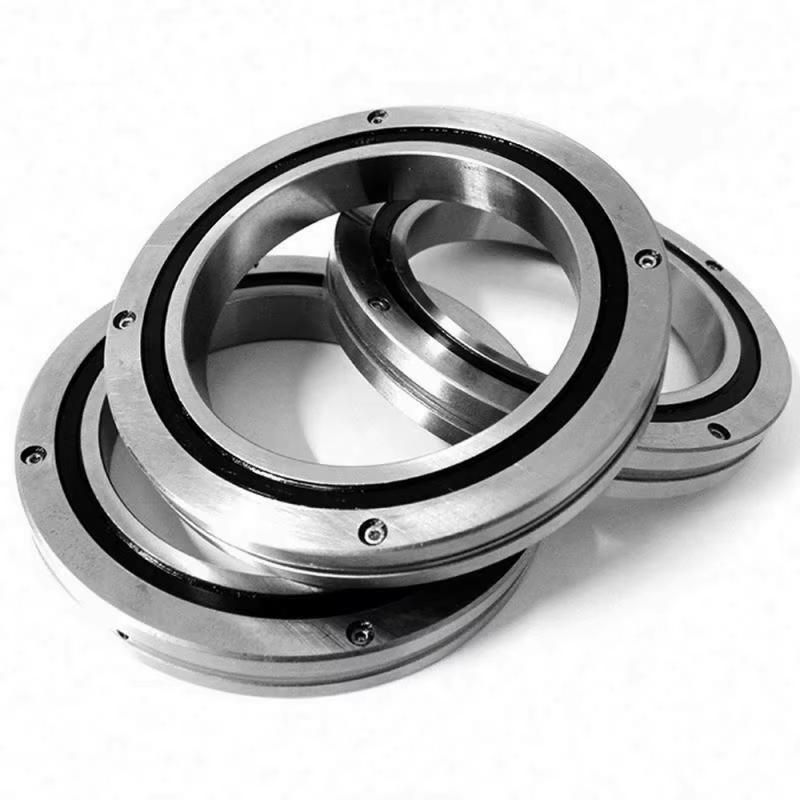
A cross cylindrical roller bearing features cylindrical rollers arranged alternately at 90° to each other between inner and outer rings.
This unique structure allows a single bearing to support:
- Radial load
- Axial load
- Tilting moment
All at the same time—with high rigidity.
🔹 Why Do Engineers Choose This Type?
The key reason is simple:
👉 Rigidity and precision
Compared to ball-type slewing bearings, cross cylindrical roller bearings offer:
- Higher stiffness
- Minimal elastic deformation
- More stable rotation accuracy
This makes them ideal for applications where even small deflections cannot be tolerated.
🔹 Typical Applications
You will often find them in:
- Robotics and automation systems
- Precision rotary tables
- Medical equipment
- Semiconductor manufacturing equipment
In these fields, accuracy is not optional—it’s critical.
🔹 A Practical Insight
Many customers initially consider four-point contact ball bearings due to cost.
However, when the application involves:
- High precision positioning
- Frequent start-stop motion
- High rigidity requirements
Switching to cross cylindrical roller bearings often leads to better long-term performance.
⚠️ Important Note
These bearings are not always the “better” choice.
They are:
- More expensive
- More sensitive to installation accuracy
- Require better machining of mounting surfaces
Choosing them without real need can increase both cost and complexity.
📩 Final Thought
The right bearing is not the most expensive one—it’s the one that fits your actual working conditions.
If you're working on a precision system and unsure whether this type is suitable, feel free to reach out. I can help you evaluate the best option based on your application.